Showing posts with label Christianity. Show all posts

Thursday, June 3, 2010

Breaking the Ties that Bind, Not the Faith of My Father

This following quote from the NY TIMES December 3, 2008 article entitled “Secrets only your witch would know”:

“Enchantments, the witchcraft store in the East Village, recently moved down the street from where it had been a landmark since 1982. Last year, my friend Nancy bought me one of its customized Solar Blast candles for my birthday. After lighting it, a flurry of life-altering changes suddenly occurred — which was, at least, an amusing coincidence. I developed a more absorbing curiosity when Nancy gave me a second Solar Blast this year, and this one, too, seemed to be a cosmic throw-switch, releasing yet another mother lode of life-changing events.

“Years ago, I had been dumped by my boyfriend and was out of my mind,” Nancy told me as we waited at a cafe for Enchantments to open (a bit later than the posted store hours). “This chick walked up to me at a party and told me she was ‘drawn’ to my ‘grief mask.’ ”

I chortled.

“I was in that place where you’ll insinuate yourself on anyone, so I told her my story,” Nancy continued. “She told me that I had to go to Enchantments.

“I said, ‘Wait ... aren’t they, like, Wiccan?’ And she said, ‘Do you want your boyfriend back, or what?’
 

“I went. First I got a tarot reading from this absolutely stunning witch, with big blue eyes, tons of black hair, a thick Bronx accent and a huge pentagram necklace. I was weeping, and she was so comforting! So maternal! She said, ‘I am going to give you something very hard core.’ She comes back with this fire engine red candle in the shape of a penis."

O Ye of Great Faith! It has been perplexing in conversations to hear how religiously non-Christian so many young people from Christian families are among affluent America.
 

It isn't so much because there are people that don't believe in anything, quite to the contrary. These young people are willing to accept that there is some truth and spiritual insight in any faith- Wiccan, Word Magic, Karmic Buddhism, "Kabbalah" or any bastardizations of bastardizations thereof. (Seldom Islam however, because the media has informed them that it is bad and even worse, like devout Christianity.) Many also have a faith in their own "psychic" ability to have messages sent or to receive guidance from unknown and supernatural basis.


Any faith but Christianity in any and all forms are an anathema to young, affluent urban Americans, even though they have in general never explored them.
 

Why then not the interest or approval of Christian mysticism, lectio divina (meditational reading of a NT passage), logos (word magic), do-unto-others ethics (karma), neo-Platonic philosophical discourse, and other alternatives that are more easily accessible and frankly more developed parallels to "exotic beliefs" ? Surely the void filled by the cursory familiarity that so many young adults have with exotic religions could be fulfilled in a religion that was developed within their own cultural and history.

Yet Christianity is an anathema to so many for whom the religion has been passed to for OVER A THOUSAND YEARS.
 

Let me be clear: these young people are not making a partial dismissal. When "educated" affluent young people hear of someone who has a thoroughly Christian faith, they are apt to guffaw, dismiss and look down upon the person. Undoubtedly a certain number of avowedly Christian politicians have helped keep red states red because so many young people found their Christian faith repugnant.

The rejection of Christianity was not simply rejection of a belief system but rejection of a culture, community and identity. Few young apostates know enough of the religion to dismiss the belief system, but they imagine it to be JUST a belief system, which is of course, dead wrong.

Particularly at the heart of Protestantism is the cultural notion of each church as a "community of faith" interpreting what they believe, working this out in themselves and among each other. A community- people of different ages and occupations, etc. coming together in goodwill and brotherhood, practicing age-old, edifying traditions and marking the days with rituals that they experience in themselves.

Acts of faith, hope, charity are also part of Christian culture. That identity is not wholly dependent but reinforced in a community.Even if just for an odd Sunday, holidays and weddings, birth, christenings, funerals, meetings, events and community projects, etc. (Or let's face it, subsidized childcare, SAT/ACT classes, career networking, and an extra safety net in time of need- and that's fine.) 

This Christian culture in the United States has not been replaced of course; such markings are indelible, even with the faux-culture of consumerism and materialism. Where there is not a cultural force to replace American Christianity's impact this is to some extent the "default" influence.
 

Replacement would require something more than rejection; it would require the comprehensive deconstruction and refashioning of all facets of perspective that individuals in society are just not equipped to enter into as individuals. Never to worry- the market has found part of the solution.


What we have seen is the increase of disparate “quick fixes”: consumerism, commercialism, support groups, entertainment, gurus, drugs and addictions of all kinds.
 

None of this deals with the lost culture, community or identity. None of it deals with the spiritual experiencing of seasons of the year and cycles of our lives- birth, death, commitment, the sorrow and joy of the spirit. None of this "religion ersatz" deals with the yearnings, fears and loneliness that come in blasts, bustle and our quiet moments.
 

Rational wondering and irrational spiritual hinting are not explored in any substantial way by the crassness that has replaced Christianity. The wisdom of centuries tucked away in works of religious philosophers (of many faiths) like the collective advice of elders hasn't been replaced by cheap catch-phases and facile advice delivered by our modern commercial gurus. The market has not replaced or offered guidance and strength to the relationships that we have with each other as individuals, families, neighbors, friends, husbands, wives, daughters, sons, brothers, sisters, fathers, mothers...

So why THIS REJECTION of what has been part of an identity, BINDING SOCIETY AND TRANSMITTING TRADITION AND CULTURE for over a millennium? It would be far too easy to simply say, “social decay”, “the media”, “progressivism gone awry”, “influences in higher education”- though all of these answers would be correct. These are the manifestations, not the causes.

Christianity is today as it has always been- a threat to many powerful interests.

Christianity has at its core a rejection of materialism. The moral issue of whether people gain their possessions in ways that injure others and whether they take responsibility for those who lack basic necessities is problematic for those in power. In Christianity wealth by oppressing others is severely criticized. Failing to share with the weak and powerless is condemned.

Christianity is communal. Naked individualism marks a certain turn in American capitalism (modern, untraditional and seldom in the best interest of the individual). This form which becomes a mindset approaching a religion itself serves powerful interests.

Christian identity also serves as a powerful force for identity and thus a powerful political force. So far political leaders have been able to marginalize, regionalize and manipulate Christian identity in interesting ways: Christian Zionism, or (red herring) single issue activism such as abortion or gay marriage. Ironically none of the supposedly orthodox stances are overwhelmingly popular with Christians or high on their reported list of concerns. To the degree these issues are important for most people they are not triggers of "reactionary Christians" but nuanced arguments rooted in concern for society. The wide platforms of mainline churches, including Catholicism, have had no national impact in recent decades.

There is another actor responsible for the decline among the urban (and suburban) youth. The American church is, perhaps primarily to blame, particularly mainline Protestantism. It has fetishized external philanthropy; rejected communalism; turned away its community; responded with hatred to its own identity and traditions; rejected both utilitarian and spiritual needs of the entire swath of its traditional base; and generally houses clergy ignorant or hostile to the faith which they allegedly serve.

Young men and women in a city like New York who don’t fit into an exotic, or non-traditional category will find it nearly impossible to find a church that addresses their needs. Seemingly every urban church must cater only to the illegal-immigrant, drug-addicted, homeless, HIV positive, homosexual or transvestite population. It also has taken an odd interest in avant-guard performing arts- but never to all the neighborhood denizens or their concerns.

It should be noted that the urban church seldom seems involved in alleviating the causes for the conditions for the perceived less-fortunate but instead in dispensing the charity of yesteryear like a package of band-aids (or in the case of the truly disengaged church, like a performing arts council.) These are not churches that want to involve themselves with a community of men and women who trudge through the day and look for spiritual comfort in a community led by a faithful and wise minister who joins them in their struggles to reconcile their mundane and spiritual affairs. Many clergy have seemingly stopped believing.

The clergy before anyone realizes that the church is an institution and culture. It is not surprising then that some would be satiated by having an authoritative hand in the institution without the bother of maintaining either flock or faith.

Christian apologist GK Chesterton said: "The danger when men stop believing in God is not that they'll believe in nothing, but that they'll believe in anything."

Chesterton wrote those words almost 100 years ago and he wrote them at a time when people like William Butler Yeats were devotees of the New Age fad of their time, namely theosophy. Clairvoyants, palm readers and the most esoteric forms of Eastern mysticism were all the rage. Anything but Christianity was the order of the day. Anything but what is so intrinsically tied to the faith of our fathers.

Faith of our fathers-- It is arguable that the exoticism that the young are so seemingly attracted to can be found not in commercial pop-psychology wrapped in Eastern garb but in Christianity. Irish American Catholicism carries something of the ancient druid in its ritual and understanding; traditional Scottish austerity and communalism are reflected in the Presbyterian Church; more than trappings remain of the pre-Christian Germanic faith in both Protestantism and Germanic Catholicism; the Eastern Church is very apparently Hellenistic, Near Eastern and Slavic- as relevant to its subscribers; the strongest echoes of Africa in America are found in a Black Protestant church; and among some endemic traditions of American Protestantism and Latin American Catholicism the continuation of Native American practices through syncretism. Often there is a cross pollination that is seldom acknowledged or celebrated.

It has been a desperate, punishing effort to retain the faith of our fathers, specifically against Christianity. Faiths pre-dating the Christian Church have struggled mightily to preserve their logic, traditions, spirituality, ritualism, and no small measure of identity; interwoven into religion are accumulated knowledge and responses to conditions and environments. It has been one of the greatest misfortunes of history that the institution of the Church has not been able to spread a simple message without attempting to eradicate other cultures. It is in the church's failure that has come an unintended blessing; Christianity has been as transformed as it has been transformative.

The main thread of Christianity, as much as the gospel itself has been as a central institution BINDING THE COMMUNITIES IT SERVES. American Protestantism can be seen libertarian democracy and reason- in fact IT IS THE BACKBONE OF THE AMERICAN EXPERIMENT; the American Catholic church institution building and social empowerment. And the Black church has not been a celebration of the religion of oppression but a reinterpretation of the faith- supporting resistance, hope and mutual aid.

Any Anabaptist out there don't get in an uproar- while I believe it obviously impossible to divorce religion from culture, Christianity is not just a culture, it is a belief system.

At its simplest Christians are urged to follow the teachings of Jesus Christ (and most say "meddling" Roman and Hellenistic philosophers and vernacular translators.) The faithful try to model their lives on his (perhaps idealized) life. That means living for others and not just for ourselves.

Rather than mount a defense of the supernatural claims of Christianity in the short space left, I'll simply limit myself to pointing out a gigantic qualitative difference between Christianity and the various forms of superficial narcissism that has taken its place.

It is this: Christianity is an ethical system as well as being a religion, and the various forms of fortune telling, greed assuaging, and superficial self-validation are not. They offer no ties of community, overarching ethical guidance, or ongoing religious-philosophical inquiry and exercise.

The deeper rationalism, and yes challenges of all forms of belief that philosophers have worked through under the wide banner of "Christianity" have not been replaced by something more sound, astute or developed (if only because Christianity has tended to be so broad and so old.) Whether proofs or doubts, arguments of efficacy or for that matter mysticism and even psychology can be found in the deep well called Christian thought.

The exotic dilettantism (though not the religions themselves) served by popular pseudo-religion and pseudo-philosophy are all about the self, not others. It is not surprising then that that Western "practitioners" never delve deeply into Eastern beliefs or practice them too strenuously. They have, in their superficial point of view, dismissed religion.

Anyone who can't tell the difference between an ethical system like Christianity, and sub-species of narcissism like consumerism, pop-religious exoticism, etc. needs to come out from behind their own prejudice and perhaps- dare I say show a little bit of reason.

Tuesday, April 6, 2010

Politics by Any Other Name (Jewish Identity and Language Issues)

Neither Adam, Seth nor Noah were called Jew; nor were Abraham, Isaac or Jacob. Moses was not called a Jew and neither were Saul, David or Solomon called Jew. In fact you will not find the word Jew in the first eleven books of the Bible. 


The first time Jews are mentioned in the Bible, is in II Kings 16:6 (and then only in translations revised in the eighteenth century) where we find Israel was at war with the Jews and drove the Jews from Elath. It is interesting that we can read over five hundred pages of the Bible before we find a “Jew” anywhere, yet those who call themselves Jew today claim the first five books of the bible and call it their Torah.


It is strange how modern conventions and politics have so changed language and perception, so that those who claim to have written the first five books of the Bible and call themselves “Jews”, can't find the word Jew written anywhere in the book they call their own.  A scholar on Jewish identity formation wrote:


"The challenges for group formation of modern "Jews" were this: they were seeking to define themselves as a group of people not living in a land that they claimed origin from, did not have any continuous nor demonstrable link to.  Secondly, the land they claimed origin from was occupied continuously by others.  Thirdly, the basis for this groups claims was a non historical, religious text of uncertain provenance, with definitions that were unclear, contradictory or lacking, and affirmations that were wavering, imprecise and not unique.  Fourthly, the claims made by this group of people, was to an ancient and hereditary birthright that conflicted with more substantial claims, particularly because the claim of origin was a claim of divine right and right of conquest, not autochthony. Fifthly, the claim of divine right and right of conquest was one whose application rested upon the claim being a uniquely chosen people by God, with special hereditary attributes, rights, duties and protections in relation to the rest of humanity (a "chosen people"), no matter where this chosen people found themselves.  

An additional problem was that the claim made for being a "chosen people" according to religious texts was rebutted by the world's two largest religions, Christianity and Islam, which claimed universal, antagonistic and superseding and/or replacement covenants, or competing claims to the heritage of the same faith tradition.  In the second millennium in AD, these religions were clarifying and expanding their identities with the support of the political structures of the time. This was also a time of formation for the modern Jew, without the benefit of the state, when the "Jews" did not even have a clear name." 

The term “Jew” originated in the late eighteenth century as an abbreviation of the term Judean and refers to a resident of Judea without regard to race or religion, which we have much evidence for in Biblical passages and more reliably, the historic record. It was also applied to the tribe of Judah by later scholars.  


It was not until the last century that we saw the word “Jew” expanded to mean virtually everyone in the region even before there was a “Judah”, and including people who were distinctly not of that tribe.


This particular use was largely taken by Jewish scholars, who were both attempting to solidify their historical identity enjoying a new found voice in European and American scholarship. These scholars were also seeking to blunt the force of biblical anti-Judean sentiment and it was at this time, in Germany that the phrase anti-Semitism came into being, a religious / pseudo-scientific term that broadened Jewish identity to include virtually all of the eastern and southern world from the European vantage point, from the Atlantic to the Indian sub-continent.


In none of the manuscripts of the original Old or New Testament was Jesus described or referred to as a "Jew" nor is Jesus a Jew even by the standards of a person from Judea.  But in recent years Jesus has been converted by the power of language application into a Jew!


While the use of term “Semitic” (descended from Biblical personage Shem) has been disputed by scholars who point out that the generational information in the Bible is contradictory and perhaps impossible there is, nevertheless a language, culture and religious similarity that exists. Equally important from a religious perspective is that there was an exchange of religious ideas through out the Near East among this language and cultural group. Egypt is where we see the first documented monotheistic society, and many beliefs and practices, from creation stories, circumcision, to a day of rest and baptism create a sort of religious catalogue. It is thus not surprising when we see tribal gods and personal gods, mutual recognition of gods and an assortment heavenly figures who come into play in the Old Testament.


Jews as Pharisees


As the people calling themselves Jews have a failure of ancient recorded recorded history that there is, prior to the modern period, of a race, religion or nationality, referred to as "Jew" (as opposed to the peoples of Judea, there are traces to particular sects of the people of Judea in the time of Jesus, to which self-styled "Jews" today refer to as "Jews", were known, i.e., "Pharisees" who followed the practices described, controlled the Temple of Jerusalem and all of its offices, and were depicted in the role of “Jews” as is present usage.

Jews as Edomites


In this murky order of things we are left we can apply post fact logic to make the linkage that otherwise does not exist. A Judahite or descendent of the Tribe of Judah are the precursors in name if not descent of Jews though this is not undisputed.


Psalm 83:3 says God's elect are "hidden" or protected ones, and that they are under attack from a coalition of evil groups led by Edom. Who was Edom? Esau, the brother of the patriarch Jacob, became the ancestor of the people called Edom, or Idumea.  


The Antiquities of the Jews by Flavius Josephus, XIII ix 1; XV vii 9 instructs us: John Hyrcanus forcibly assimilated the Edomites as a national group in about 120BC. The Jewish historian Josephus, who lived just after the time of Christ, wrote, "They [Edom] were hereafter no other than Jews'. 

The Jewish scholar Cecil Roth in his Concise Jewish Encyclopedia (1980) says on page 154, "John Hyrcanus forcibly converted [Edom] to Judaism. From then on they were part of the Jewish people. In the Talmud the name of Edom was applied to Christian Rome, and was then used for Christianity in general". Terrible judgments against Edom are made in most of the prophecies of the Old Testament. For instance, Isaiah 34, 63, Jeremiah 49, and the entire book of Obadiah. To what extent the Edomites then are present day Jews (as a renaming or overlapping or related group) is speculation.


Modern Jews Referring to Themselves as Khazars


Unsuspecting Christians are subjected to this barrage from sources they have little reason to suspect. Jewish scholars such as Arthur Koestler originally asserted the historic accuracy that so-called "Jews" throughout the world today of eastern European origin are unquestionably the historic descendants of the Khazars, a Turko-Finn ancient Mongoloid nation deep in the heart of Asia, according to history, who battled their way in bloody wars about the 1st century B.C. into eastern Europe where they set up their Khazar kingdom.


The historic existence of the Khazar kingdom of so-called "Jews", their rise and fall and how King Bulan and the Khazar nation in about 740 A.D. became "Jews" ) or Hebrews by conversion was not a new assertion. In 1945 this author gave nation-wide publicity to his many years intensive research into the "facts of life" concerning Khazars. Koestler's promulgation of these ideas was sensational but came at a very sensitive moment in history for "Jews" being published at the close of the war.”


It may very well be that Koestler, a Zionist was politically motivated to end the racial and (Christian) Biblical problems that Jewish ethnicity caused for Jews in the West. If Jewish ethnicity and Jewish ties to a condemned people in the Bible was a source of animosity, it was one was also one that would not go away as long as external perceptions of separation and difference on racial and religious grounds existed.  That Koestler was a Zionist and influential Jewish scholar fed the impression that Koestler’s motivations might have tainted if not altogether constructed his scholarship.


The Zionist movement in particular felt that there were dangerous implications to their now powerful movement.  Koestler became then, a target for some who felt he was doing more harm than good regardless of his intentions. While the scholarship should rightly be contested, it should not be attacked for its conclusion rather than its research and premise.


Regardless of his motivations or the quality of his scholarship, Koestler was a single scholar in a line of those who have tried to research an area where there is historic record is virtually non existent and even the few entries in the religious record are spotty and contradictory. Both religious works and research leaves us with over a millennium of information missing.


In an original 1903 edition of the Jewish Encyclopedia in New York's Public Library, and in the Library of Congress, Volume IV, pages 1 to 5 inclusive, appears a most comprehensive history of the Khazars. Also in the New York Public Library are 327 books by the world's greatest historians and other sources of reference, in addition to the Jewish Encyclopedia, dealing with Khazar history, and written between the 3rd A.D. and 20th centuries by contemporaries of the Khazars and by modern historians on that subject.


Language Issues Follow 


Synagogue


Synagogue- c.1175, from O.Fr. sinagoge (11c.), from L.L. synagoga "congregation of Jews," from Gk. synagoge "place of assembly, synagogue," lit. "meeting, assembly," from synagein "to gather, assemble," from syn- "together" + agein "bring, lead."   The French word of ultimately Greek origin was assimilated by Jews over time and it entered into (European Jewish usage) and Western consciousness as a "Jewish word for their Church" when it is no such thing.


Rabbi


And likewise with “Rabbi” or “Rebbe” being a Greek word presumably influenced by a Semitic word meaning “Sir” or “Master”. It is still in common use in its original form in Arabic “Rahb” or “Rehb” in the same context. The word assumed its use as Priest only in the last late 18th century, with European Jewry giving it this context as learned borrowing and presumably an alteration to make an equivalent to the (Catholic) Christian function of priest.


Passover


Interestingly, "Passover" is also not found in the Bible.  Passover has entered by translation as an often misunderstood language parallelism in Pesach which was a holiday of sacrifice of the Lamb and rest rooted in Canaan and celebrated in ancient times in the entire Middle East and preceding Judaism. Like the exile story itself, which was a story far preceding Judaism (ironically a borrowing of the stories of the Canaanites and Sumerians.) These appropriated phenomena were conflated-  a holiday of sacrifice and the "exodus" story particularly among European Jewry.  The Biblical and historic holiday event is documented as occurring before the Exodus and among Canaanites, including the consumption of unleavened bread and lamb sacrifice, and lamb (and wine) consumption during a feast.  In the Bible the feast event is all that is provided.   Historically the only time we come close to anything resembling the story that could be Passover in any Jewish context it is Josephus' account of a tale he supposedly hears from Manetho, identifying the expulsion of the Jews with the expulsion of Hyksos and the expulsion of a group of lepers, led by an Egyptian priest called Osarseph. Other better documented accounts reflect that Josephus' tale itself a conflation of events of the Amarna period, the earlier Hyksos expulsion, and events throughout the 19th Dynasty.


Circumcision


Circumcision is another example of a cultural issue that causes confusion with identities.  The Book of Jeremiah lists the Egyptians, Jews, Edomites, Ammonites and Moabites among others who circumcise, and circumcisions seem to include the majority of ancient cultures in the area. Herodotus, writing a century later in the fifth century BC adds the Colchians, Ethiopians, Phoenicians, and Nabateans (a catchall term for the trading people of northern Arabia, Canaan, Jordan, Syria and Euphrates) as circumcising. For all of these peoples the reason is described the same, a religious and health act that is tribal in nature.

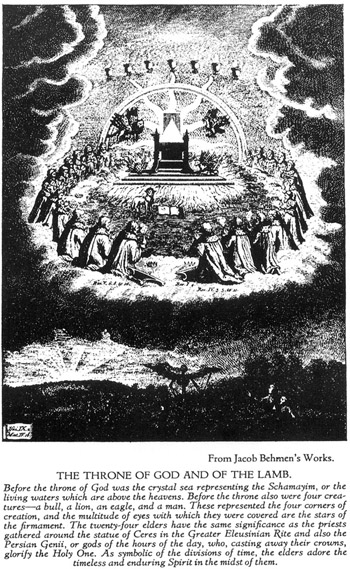
The Lion and the Lamb, A Story Whose Significance Has Been Hidden of Late

This is taken from a Popular Biblical sermon/lesson for the old and popular reading of the Book of Revelations.  It is especially interesting because this once popular reading of the Bible in recent years has declared forbidden to be taught any longer at churches that are converting to what was once "fringe" Dispensationalism:

To those of you who have been taken in, without reading or glossing over the Book of Revelations by Dispensationalists and others hostile and in political opposition to Christianity and Jesus Christ, read Revelations Chapter 5:5 again. In fact, go back to the beginning of the Chapter or even the beginning of the Book and arrive again.  It will become very clear, if you put all your preconceived and willful notions aside that the scene is one of a struggle, replicating the life of Jesus, and the Lion of Judah is the Devil, (the Lion seeing who it can devour) making a false claim to what is his. Repeat, the Lion of Judah is the Devil.  And Jesus is the Lamb, slain, that rises.   

Now when you read Rev 5:5 you will see it plainly, that the four beasts and the elders, onlookers, who first believe that the Lion of Judah could prevail and break the Seals and deny Christ and the World His Message.  But the Slain Lamb takes the Book and Open the Seals and sits upon the throne. 


Sounds familiar doesn't it?  The Lion of Judah thought it could hold the Word of God and destroy the Lamb! Instead it was the Lamb who brought to us his word and though slain rose again and assumed His throne. We can look then at Revelations understanding that that as it was then so shall it be. 

If you think just depicting the Biblical story of the Passion of Christ would raise a firestorm you should not be surprised that so few are brave enough to acknowledge that Revelations tells us that the same perpetrators of Judah will be there trying to prevail over the Lamb and deny him the unsealing of the Book again! So the tribe of Judah is trying again, and thus fulfilling the prophecy.

The latest lie is that Judah will try to tell you that Jesus was not born of God and instead is "Jesus the Jew". To say that is to BLASPHEMY and to do so disingenuously.  It is to say that the Bible lies about Jesus being the Son of God and the miraculous Virgin Birth. It is disingenuous because while we have no genealogy of Mary we do know she is from Galilee,(גְּלִיל - הַגּוׁיִם; lit:Glil HaGoyim) "Place of the Goyim", with much of this name being retained in its present name of Galil or HaGalil, not Judea. (As to the esoteric, so called "Synoptic Problem" of contradictory Gospels of His birthplace during the Roman regional Census of 6 AD still presents him as a Galilean, born in Bethlehem or Galilee or the well known expression from Isaiah 9:1 Galilee of the Gentiles.)

Romans authority had no interest in Christ's origins as a colonial subject of Iudaea regardless of tribe, nor his claims of supernatural birth.  Judeans and an influx of Edomites, in particular as Pharisee and Sadducee were the administrative power under the Roman colonial province-nation given name "Iudaea". "Iudaea" and "Judea", in English translations since 1800 been translated as "Jew" regardless of context. 

Iudaea named incidentally after Judea, as it administered under the Romans, the territory of all around it including Palaestina, Israel, Samaria, Edom, Galilee and Moab among other non-Judean areas.  Only the Greeks and Romans in the towns of Decapolis were not subject to being Jews under Judean authority at the time of Jesus. Jesus being a Jewish citizen under Roman colonial administration allowed him to be tried either for sedition by the Romans or the original charge of blasphemy by Jewish (Judean administered law). However Jesus did not have the protections he would had he been a of the Judean (priestly) class, highlighting the division of the class who used appropriately the emblem of the Lion of Judah that would  lead the Lamb of God slaughter through falsehood.  Luke 23: "And they began to accuse Him saying, We found this fellow perverting the (province), and forbidding to give tribute to Caesar, saying He Himself is Christ a King."


Even from a non-religious view then, this modern "Jesus the Jew" is a cynical and inaccurate ploy by those with an obvious political agenda: 1. Deny Jesus as Christ, 2. Deny Jesus brought to the world a new message and faith, 3. To make Christians subordinate, 4. To deny all implications of the Gospel and Revelations, the story of Jesus and his message, and the fate of the world, respectively; and thus this denial is a refutation of Christianity.


It is also to deny this central part of the Gospel, or life of Jesus.  The charge is that as a subject of Judea he was responsible to Jewish charges.  Let us look to the Book of John:


 33Then Pilate entered into the judgment hall again, and called Jesus, and said unto him, Art thou the King of the Jews?
 34Jesus answered him, Sayest thou this thing of thyself, or did others tell it thee of me?
 35Pilate answered, Am I a Jew? Thine own nation and the priests have delivered thee unto me: what hast thou done?
 36Jesus answered, My kingdom is not of this world: if my kingdom were of this world, then would my servants fight, that I should not be delivered to the Jews: but now is my kingdom not from hence.
 37Pilate therefore said unto him, Art thou a king then? Jesus answered, Thou sayest that I am a king. To this end was I born, and for this cause came I into the world, that I should bear witness unto the truth. Every one that is of the truth heareth my voice.
 38Pilate saith unto him, What is truth? And when he had said this, he went out again unto the Jews, and saith unto them, I find in him no fault at all.
 39But ye have a custom, that I should release unto you one at the passover: will ye therefore that I release unto you the King of the Jews?
 40Then cried they all again, saying, Not this man, but Barabbas. Now Barabbas was a robber.


How is it then that “Christians” who say “Jesus is a Jew” or “the King of the Jews” (or even more ignobly “A Jewish Carpenter” or “A Jewish 'Rabbi' or Teacher”) freely deny Jesus his own message and do so, “upon the cock crow” each day?  Will the betrayal of Jesus by his followers and the persecution by Judah continue on a daily basis then until His Return?


Returning to Revelations then, it is no wonder then, to a Christian then why so few from the tribe of Judah in all of history will be among his companions:  "12 thousand" Jews plus the same from 11 other tribes of Israel) will enter his kingdom while "a great multitude, which no man could number, of all nations, and kindreds, and people, and tongues" will enter and receive the Lord's blessings and protection.


5:1        And I saw in the right hand of him that sat on the throne a book written within and on the backside, sealed with seven seals.
5:2                   And I saw a strong angel proclaiming with a loud voice, Who is worthy to open the book, and to loose the seals thereof?
5:3                   And no man in heaven, nor in earth, neither under the earth, was able to open the book, neither to look thereon.
5:4                   And I wept much, because no man was found worthy to open and to read the book, neither to look thereon.
5:5                   And one of the elders saith unto me, Weep not: behold, the Lion of the tribe of Juda, the Root of David, hath prevailed to open the book, and to loose the seven seals thereof.
5:6                   And I beheld, and, lo, in the midst of the throne and of the four beasts, and in the midst of the elders, stood a Lamb as it had been slain, having seven horns and seven eyes, which are the seven Spirits of God sent forth into all the earth.
5:7                   And he came and took the book out of the right hand of him that sat upon the throne.
5:8                   And when he had taken the book, the four beasts and four and twenty elders fell down before the Lamb, having every one of them harps, and golden vials full of odours, which are the prayers of saints.
5:9                   And they sung a NEW song, saying, Thou art worthy to take the book, and to open the seals thereof: for thou wast slain, and hast redeemed us to God by thy blood out of every kindred, and tongue, and people, and nation.


Saturday, March 6, 2010

Irreconcilable Differences? Jews, Christians and the Bible

Adversaries Before God? Jesus and the Jews 

In the present, the most cited differences between Christianity and Judaism are issues of transcendence: Christian universalism, idealism and the everlasting spirit versus Judaic tribalism, realism and focus on the material and mundane.  The conflict embedded in the narrative of the Gospel, Apostolic experience and Apocalyptic Scripture which long informed (Christian) opposition has been to some degree relegated to secondary status. Scriptural observation has returned to the fore recently, as is proper (due in no small part to attacks on traditional, Scriptural based perspectives of the New Covenant Supercessionism and related views by politically driven, extra-Biblical "Messianic Judaism" among "Dispensationalists".)
-------------------------------------------------
 

PART II: His Lifetime, Mutual Rejection and a Death Sentence

The inimical perspectives and identity of the Jesus Christ and Jews characterize the relationship of Jews and Christ, the Son and the Lamb vs the Lion of Judah, reaching their climax on earth with the Crucifixion.  Put into essential points, they number as following: 

(1) Christ's rejection of Jewish Messiahship
(2) His attitude toward Gentiles and Jews and pronouncement of a "New and and better Covenant"
(3) His trial and crucifixion, all of which reveal his character, temperament, and objectives as being totally antithetical to the personality and objectives of His Jewish adversaries.
(Pictured Right, The Slain Lamb Rises to Conquer the Lion of Judah.)

There is unmistakable clarity in the Biblical message of Jesus and his disciples. Jesus makes a point of refusing miracles upon those who confuse his status as a Jewish Messiah. Many Jews consider certain passages of the New Testament, especially those blaming Jews for Jesus' execution and those suggesting that Christianity supersedes or is separate from Judaism, as “anti-Semitic”.  

Christ demonstrated a very real antipathy towards the people called Jews, in Bibles published after about 1770, but who would be more accurately described as Judeans, or residents of the Edomite-dominated territory of Judea. Jesus said to the Jews "You do not believe because you are not of My sheep" (John 10:24-27).  In contrast, Jesus instructed His disciples - who were from Galilee of the Gentiles, not Judea (Acts 1:11; 2:7).  And in Revelation 2:9 and 3:9, Jesus speaks of "those who say they are Jews and are not, but are the synagogue of Satan".

The Jews shouted "Crucify Him!" (John 19:15); "His blood be on us and on our children" (Matthew 27:25). In an appropriate turn about, when Jesus returns, their blood will stain His own garments. The spiritual leaders of the Jews were the Pharisees, who not surprisingly were associated with the Edomite (Matthew 22:15-16; Mark 3:6; 12:13). Jesus repeatedly condemned the Pharisees as "hypocrites" (Matthew 15:7; 22:18; 23:13,15,23,25,27-27). He also called them "serpents, the offspring of vipers" (Matthew 3:7; 12:34; 23:33).

And Jesus did not simply denounce the non belief of the Jews,  “I know that ye are Abraham's seed; but ye seek to kill me, because my word hath no place in you…  You are of your father the devil, and lust for what is forbidden. He was a murderer from the beginning, and abode not in the truth, because there is no truth in him . . . as he is a liar and the father of lies" (John 8:31-44)
 
When passing in Samaria on the road back to Galilee Jesus asked a Samaritan woman for a drink who knew came. (She would not know of his dangerous encounters or his origin in Galilee.)  Jesus makes it clear his rejection of the salvation of the Jews and he disparages their worship. 

John 4:9 Then that Samaritan woman saith to him: How dost thou, being a Jew; ask of me to drink, who am a Samaritan woman? For the Jews do not communicate with the Samaritans. 
 10 Jesus answered and said to her: If thou didst know the gift of God and who he is that saith to thee: Give me to drink; thou perhaps wouldst have asked of him, and he would have given thee living water.  
11 The woman saith to him: Sir, thou hast nothing wherein to draw, and the well is deep. From whence then hast thou living water?  
12 Art thou greater than our father Jacob, who gave us the well and drank thereof, himself and his children and his cattle?  
13 Jesus answered and said to her: Whosoever drinketh of this water shall thirst again: but he that shall drink of the water that I will give him shall not thirst for ever.  
14 But the water that I will give him shall become in him a fountain of water, springing up into life everlasting.  
15 The woman said to him: Sir, give me this water, that I may not thirst, nor come hither to draw. 
16 Jesus saith to her: Go, call thy husband, and come hither.  
17 The woman answered and said: I have no husband. Jesus said to her: Thou hast said well: I have no husband.  
18 For thou hast had five husbands: and he whom thou now hast is not thy husband. This, thou hast said truly.  19 The woman saith to him: Sir, I perceive that thou art a prophet.  
20 Our fathers worshiped on this mountain: and you say that at Jerusalem is the place where men must worship. This mountain, Garizim, where the Samaritans had their temple. 
21 Jesus saith to her: Woman, believe me that the hour cometh, when you shall neither on this mountain, nor in Jerusalem, worship the Father.  
22 You worship that which you know not: we worship that which we know for salvation is from the Jews. 
23 But the hour cometh now: when the true worshipers shall worship the Father in spirit and in truth for the Father seeketh such...
-----------------------------------------------------

PART III:  A NEW COVENANT AND A BROKEN COVENANT

Jesus himself is the first to mention such a New Covenant.  At Luke 22:20 " 20In the same way, after the supper he took the cup, saying, "This cup is the new covenant in my blood, which is poured out for you".  Jesus uses the term “new covenant” in association with his blood symbolized in the Memorial Cup. Paul quotes the same language in 1 Corinthians 11:25. [Compare also 2 Corinthians 3:6] Based on this alone this spiritual contract went into effect following the outpouring of Christ’s blood.

The word “covenant” occurs several times more however. The New Covenant goes into affect following the death of Christ, for blood must first be poured out.  Paul first associates such a new covenant with the new priesthood foretold in Psalm 110:4, “Just so, Jesus has received a pledge of a better covenant.”    And again: Hebrews 7:22, "By so much was Jesus made a surety of a better Testament."   As shown above Psalm 110:4 was fulfilled upon the resurrection of Christ, after he had made his flesh and blood self-sacrifice.

The clarity of the replacement of the old covenant with the new is provided with so much unequivocal clarity and force that there is no room for coexistence in the same faith by even the most liberal interpretation:

1) The old covenant and old dispensation is dead and done away:

 2Cor 3:7, 11 "7But if the ministration of death, written and engraven in stones, was glorious, so that the children of Israel could not stedfastly behold the face of Moses for the glory of his countenance; which glory was to be done away:   commanded to be cast out.   11 For if that which is done away was glorious, much more that which remaineth is glorious." 

Gal 3:19 "Wherefore then serveth the law? It was added because of transgressions, till the seed should come to whom the promise was made; and it was ordained by angels in the hand of a mediator. 20 a mediator of one, but God is one. 21 Is the law then against the promises of God? God forbid: for if there had been a law given which could have given life, verily righteousness should have been by the law. 22 But the scripture hath concluded all under sin, that the promise by faith of Jesus Christ might be given to them that believe. 23 But before faith came, we were kept under the law, shut up unto the faith which should afterwards be revealed. 24 Wherefore the law was our schoolmaster to bring us unto Christ, that we might be justified by faith. 25 But after that faith is come, we are no longer under a schoolmaster. Now a mediator is not"

(Gal 4:30),  "29 But as then he that was born after the flesh persecuted him that was born after the Spirit, even so it is now. 30 Nevertheless what saith the scripture? Cast out the bondwoman and her son: for the son of the bondwoman shall not be heir with the son of the freewoman. 31 So then, brethren, we are not children of the bondwoman, but of the free."  and it has  has been fulfilled and passed. 
(Mat 5:17,18, "17 Think not that I am come to destroy the law, or the prophets: I am not come to destroy, but to fulfil. 18 For verily I say unto you, Till heaven and earth pass, one jot or one tittle shall in no wise pass from the law, till all be fulfilled. 

2) The Old Covenant Was and Still is Faulty
Heb 8:7,8: "8 For finding fault with them, he saith, Behold, the days come, saith the Lord, when I will make a new covenant with the house of Israel and with the house of Judah: 9 Not according to the covenant that I made with their fathers in the day when I took them by the hand to lead them out of the land of Egypt; because they continued not in my covenant, and I regarded them not, saith the Lord." " Heb 8:13, 13 In that he saith, A new covenant, he hath made the first old. Now that which decayeth and waxeth old is ready to vanish away. "

3) The Old Covenant Was In Effect Until Christ
Christ (Gal 3:19) "19Wherefore then serveth the law? It was added because of transgressions, till the seed should come to whom the promise was made; and it was ordained by angels in the hand of a mediator."  (Luke 16:16) 16 The law and the prophets were until John: since that time the kingdom of God is preached, and every man presseth into it. 17 And it is easier for heaven and earth to pass, than one tittle of the law to fail.

4) Not valid any longer 
Rom 6:14,   "14 For sin shall not have dominion over you: for ye are not under the law, but under grace. And it has been taken away" And thus has ended Rom 10:4 "4 For Christ is the end of the law for righteousness to every one that believeth."

5) Old covenant was replaced with a New and Better Covenant
Heb 7:22, 22 "By so much was Jesus made a surety of a better testament. "   And this Covenant and Testament that has higher promises, after the long line of Covenants which were broken.  Heb 8:6 " 6 But now hath he obtained a more excellent ministry, by how much also he is the mediator of a better covenant, which was established upon better promises." 

6) This new Covenent offers a greater priesthood- directly with God. 
Heb 7:19 19 "For the law made nothing perfect, but the bringing in of a better hope did; by the which we draw nigh unto God."    And all this under the perfect law of liberty (Jas 1:25), "25 But whoso looketh into the perfect law of liberty, and continueth therein, he being not a forgetful hearer, but a doer of the work, this man shall be blessed in his deed. "  

7) The law of Christ as is found in the New Testament Scriptures set asides Old Testament concentration on observances and rites, for Christian Faith and Acts. 
Gal 6:2  "2 Bear ye one another’s burdens, and so fulfil the law of Christ. 3 For if a man think himself to be something, when he is nothing, he deceiveth himself. 4 But let every man prove his own work, and then shall he have rejoicing in himself alone...  5 For every man shall bear (as he may) his own burden... 10 As we have therefore opportunity, let us do good unto all men, especially unto them who are of the household of faith."
----------------------------------------------------

PART IV The Early Church- A Conflict with the Jews from the Outset

The trials, tests, apostolic confrontations encountered by Christianity in the first century epitomizes the common practices and experience. As one reads the episodes of vivid accounts of confrontations of Paul and Peter, the firm verbal and written exhortations made by the Apostle Paul against adherences to Jewish philosophy, dogma, and fables reminds that little has really changed. The constant haranguing and persistent historical confrontations between these two distinctly different theological philosophies prompted diligent oversight from the apostles and leaders of 1st Century Christendom.

One measure of the ill-feeling that was felt between Christians even of the nascent Church and Jews of that time is to list texts in the New Testament that accuse Jews and the Jewish religious leaders of violent intentions or physical violence against Jesus or his followers:

Matthew 12:9-14, 16:21, 20:17-19, 21:33-46, 26:1-5, 14-16, 47-50, 26:57, 66, 27:1-2, 19-26. Mark 3:1-6, 8:31, 10:33-34, 12:1-12, 14:1-2, 10-11, 43-49, 64, 15:1, 8-15. Luke 9:22, 20:9-26, 22:1-6, 52-53, 22:26, 23:5, 23:13-25. John 5:15-18, 7:1, 10-13, 19-20, 28-34, 8:20, 37-40, 57-59, 10:30-39, 11:45-57, 12:9-11, 18:3-14, 19-24, 28-32, 19:6-7, 12-16. Acts 2:22-23, 3:13, 4:22, 5:17-42, 6:8-15, 7:50-60, 8:1-3, 9:1-2, 9:21, 13:28-29, 50, 14:1-6, 19, 17:5-9, 20:19, 21:11, 22:22-23, 23:2-3, 10, 12-15, 20-21, 27, 24:1-9. 2 Corinthians 11:24. 1 Thessalonians 2:15-15.  

Jesus made scathing attacks on the Jewish religious leaders of his day and their teachings. (Matthew 15:12-14, 16:5-12, 21:12-13, and chapter 23, Mark 11:15-17, 12:38-40, Luke 12:1-3, 16:14-15). His condemnation of those who rejected his message was savage. (Matthew 10:11-15, 11:20-24, Luke 10:13-15).

One of the earliest controversies in the church was whether circumcision and Old Testament food taboos applied to non-Jewish converts to Christianity. (Acts 15, 21:17-26, Galatians 2:3-6). One of Paul's letters warns about "unruly and vain talkers and deceivers, specially those of the circumcision: whose mouths must be stopped, who subvert whole houses, teaching things which they ought not, for filthy lucre's sake". (Titus 1:10-11).

Add to this the description of Paul:  “...the Jews; who both killed the Lord Jesus, and their own prophets, and have persecuted us; and they please not God, and are contrary to all men: forbidding us to speak to the Gentiles that they might be saved, to fill up their sins all way: for the wrath is come upon them to the uttermost.” 1 Thessalonians 2:14-16. 

This echoes the words of Jesus himself about the Jewish Scribes and pharisees: “Wherefore, behold, I send unto you prophets, and wise men, and scribes ... that upon you may come all the righteous blood shed upon the earth, from the blood of righteous Abel unto the blood of Zacharias ... All these things shall come upon this generation.” Matthew 23:34-36.

“Woe unto you! for ye build the sepulchres of the prophets, and your fathers killed them. Truly ye bear witness that ye allow the deeds of your fathers: for they indeed killed them, and ye build their sepulchres. Therefore also said the wisdom of God, I will send them prophets and apostles, and some of them they shall slay and persecute: that the blood of all the prophets, which shed from the foundation of the world, may be required of this generation ... verily I say unto you, It shall be required of this generation.” Luke 11:47-50, 51.

With the words attributed to the crowd just before Jesus' crucifixion, again the standing of the Jews for Christians is even understood by the cursed Jews themselves in their totality:  “Then answered all the people, and said, His blood be on us, and on our children.” Matthew 27:25.  and in Luke 23:28 he states, “Daughters of Jerusalem, do not weep for Me, but weep for yourselves and for your children. 29 For indeed the days are coming in which they will say, ‘Blessed are the barren, wombs that never bore, and breasts which never nursed!’ 30 Then they will begin ‘to say to the mountains, “Fall on us!” and to the hills, “Cover us!” 

But to the soldiers who carried out His crucifixion He is more generous, as they act upon orders:  32 There were also two others, criminals, led with Him to be put to death. 33 And when they had come to the place called Calvary, there they crucified Him, and the criminals, one on the right hand and the other on the left. 34 Then Jesus said, “Father, forgive them, for they do not know what they do. And they divided His garments and cast lots.
 
Isaiah 63:1-6, "Who is this coming from Edom . . . in garments stained with crimson? It is I [the Lord] who speak in righteousness and am mighty to save." "Why are your garments red, as if you had trodden the winepress? “I have trodden the winepress alone: and of the people there was none to help Me. In My anger I trod them down, trampled them in My wrath. Their blood splattered My garments, and all My clothes are stained. For the day of vengeance is in My heart, and the year of My redeemed has come. . . I will tread down the people in My anger, and bring their blood upon the ground".
  
These verses become reflected in Revelations chapter 19:11-21, when the Word of God destroys His enemies: "And I saw heaven opened, and behold a white horse: and He that sat upon him was called Faithful and True. . . His eyes were as a flame of fire, and on His head were many crowns, and He had a Name written that no man knew but Himself. And He was clothed with a vesture dipped in blood, and His Name is called The Word of God. . . and He trod the winepress of God’s fierce anger".

In the Book of Revelations, feelings against the Jews were also as hostile as in enmity as possibly imaginable: “I know the blasphemy of them which say they are Jews, and are not, but are the synagogue of Satan.” Revelation 2:9.

Behold I will make them of the synagogue of Satan, which say they are Jews, and are not, but do lie; behold, I will make them to come and worship before thy feet, and to know that I have loved thee. Revelation 3:9.


--------------------------------------------------

PART V: Different Gods, Old and New Testament

The God whom we read of in the Old Testament presents the question of whether there is an actual succession (in understanding and religious framework) with the God of the New Testament who is plainly the ultimate, monotheistic God, the mystery of his aspects in the Trinity withstanding.  While there may be a complex supernatural world, the New Testament reaffirms this plainly and we need not as Christians have any care for any but our Heavenly Father, His Son and the Holy Ghost. 

The Old Testament however presents a complicated firmament that may not be the one that we Christians know and are subject to. When Moses and the children of Israel sang praises to the LORD they sang, "Who is like unto thee, O LORD, among the gods? who is like thee, glorious in holiness fearful in praises, doing wonders?" (Ex. 15:11). Moses also spoke of, "The LORD your God of gods, and Lord of lords, a great god, a mighty, . . ." (Deut. 10:17).

Joshua exclaimed, "The LORD God of gods, the LORD God of gods, he knoweth, - . ."(Josh. 22:22; see 22:5). Solomon, as he built the great temple, wrote: "The house which I build is great: for great is our God above all gods" (2 Chron. 2:5).

The psalmists repeatedly acknowledged that there are many Gods. Asaph wrote, "God standeth in the congregation of the mighty; he judgeth among the gods" (Ps. 82:1; see Is. 14:13: congregation.") David wrote, "Among the gods there is none like unto thee, 0 Lord; neither are there any works like unto thy works" (Ps. 86:8). Another psalm says, "The Lord is a great God, and a great King above all gods" (Ps. 95:3). And another says, "I know that the LORD is great, and that our Lord is above all gods" (Ps. 135:5). The next psalm proclaims, "0 give thanks unto the God of gods: for his mercy endureth for ever. 0 give thanks to the Lord of lords: for his mercy endureth forever" (Ps. 136:2). Another psalm of David promises, " will praise thee with my whole heart: before the gods will I sing praise unto thee. I will worship toward thy holy temple, and praise thy name. . . "(Ps. 138:1-2).

Even those who were not of Israel knew that there were "gods" who were involved in Israel's well being. The Canaanites, for instance, were frightened when the ark of the covenant was brought into the nearby Israelite camp, and wailed, "Woe unto us! who shall deliver us out of the hand of these mighty Gods? these are the Gods that smote the Egyptians with all the plagues in the wilderness" (1 Sam. 4:8).

The Babylonian king, Nebuchadnezzar, was recipient of the greatest prophetic vision ever revealed to one who wasn't an authorized prophet of God. The vision, revealed by "God in heaven" (Dan. 2:28), showed the future fate of empires and the rolling forth of the Lord's great work. Nebuchadnezzar acknowledged to Daniel that "your God is a God of gods, and a Lord of kings,..." (Dan. 2:47). He spoke of Daniel as one "in whom is the spirit of the holy gods" and told Daniel "I know that the spirit of the holy gods is in thee" (Dan. 4:8-9, 18). His queen also spoke of Daniel as one "in whom is the spirit of the holy gods" and said that he had "wisdom like the wisdom of the gods" (Dan. 5:11). Nebuchadnezzar's son, Belshazzar, also told Daniel, "I hear the spirit of the gods is in thee" (Dan. 5:14) and Daniel reminded him that "the most high God gave Nebuchadnezzar thy father a kingdom, and majesty, and glory, and honour" (Dan. 5:18).

Then there are the many passages that utilize comparatives. Many of them speak of the most high God or the highest God, which clearly indicates that there are other Gods which hold stature, but of a lesser degree. See, for instance, Gen. 14:18, 19, 20, 22; 2 Sam. 22:14; Ps. 7:17; 18:13 ,47:2, 50:14, 57:2, 78:56, 82:6, 83:18; 91:9; 92:1,8; and Heb. 7:1. Thus the LORD is Lord of lords (see Deut. 10:17; Ps. 136:3; 1 Tim. 6:15; Rev. 17:14 and 19:16), and King of kings (see I Tim. 6:15; Rev. 17:14 and 19:16).

Then there are those passages when God himself speaks to Israel, instructing them how they should show respect to other divine beings, even though they are not those whom the people directly worship. When the LORD revealed his laws unto Moses, he commanded, "Thou shalt not revile the gods, nor curse the ruler of thy people" (Ex. 22:10). And he also commanded, "In all things that I have said unto you be circumspect: and make no mention of the name of other gods, neither let it he heard out of thy mouth" (Ex. 23:13).

Then there is the issue of those who receive the word of God. In Christianity, the notion that one can have a personal relationship and receive guidance of God is universal.  Obviously there are differences in the notions of intercessors and paradigms, i.e., Saints and Jesus himself.  Among Protestants in particular, the former are less of an issue. But these intercessors themselves do not change the being of a single God accessible by all nor does Jesus who upon his Resurrection returned to the being those well known three aspects of a single whole, the Father, the Son and the Holy Spirit, addressable by all. However the personal relationship and the word never varies from the eternal message.

Finally there is in Jesus a story of an incarnation of God who seeks to be understood and is very much in conflict with ignorance, pain, despair, fear and evil in the world, a conflict writ both large and small for each of us, every day, every moment. And the New Testament makes it clear, this is conflict we all have must partake in as part of the human condition and that we all must take part in within our spirit and out world.  God himself cannot curtain this conflict even as Jesus cries out himself for its end.  As terrifying as it is, the exclamations of Jesus on the cross teaches us about this conflict.  Mark 14:36 "Father all things are possible unto thee; remove this bitter cup. Or the powerfully succinct and human, John 11:35, "Jesus wept." And Again, in john 19:28, "I thirst."  Also in Matthew 27:46, "And about he ninth hour Jesus cried with a loud voice, saying my God, my God, why hast thou forsaken me?"

The Christian rests his faith upon a covenant that supersedes the old, and is everlasting. If the God is seen as starkly different it is the fault we find with the old understanding and not the new.

A more salient difference between the Old Testament God (and the Jews) and Christian perspectives of God is found among some modern historians.  Among many historians it is a popular concept that the New Testament reflects a divergence among Jesus and his sect in the (Neo-Platonic) Hellenization (Greco-Roman and perhaps other influences.)   The subsequent theology of early Church fathers, both Apostolic and those in Church councils who helped assemble the Bible and again, theologians and even translators to the Vulgate and modern Western tongues also influenced a Testament and theology significantly different than the Old.  Some historians go even further, seeing the influence of the New Testament and God (the Trinity) not just in terms of informing the Christian perspective:  the cultural perspectives and moral evolution of Christians also possibly changed the understanding of God and the Bible.  Even if partially true, this gives even more evidence of how antithesis and opposition (rather than divergence) is at the root of the faiths. 
------------------------------------------------


PART VI:  A Jewish Perspective

Gerald S igal, scholar and author of ‘Jews for Judaism’ notes: “In Revelation 2:9, Jesus is said to have written, "I know your works, tribulations and your poverty (but you are rich), and the blasphemy by those who say they are Jews and are not, but are a synagogue of Satan." In Revelation 3:9, Jesus is said to have written, "Behold, I will cause those of the synagogue of Satan, who say that they are Jews, and are not, but lie--behold, I will make them to come and bow down at your feet, and to know that I have loved you." Jews who do not accept Christianity are characterized as worshipers of Satan, hence, the expression "synagogue of Satan." Is it any wonder that the expression "synagogue of Satan" in combination with John 8:44, where "the Jews" are characterized as descended from Satan, helped produce a portrait for faithful Christians of the "evil" Jew whose deeds on behalf of Satan took on ominous proportions? Is it any wonder that the church and its faithful followers sought to hasten the day when Jesus would fulfill his promise to "make them [the synagogue of Satan] come and bow down at your feet" (verse 9) by persecution of the Jews?”

From the point of view of the non-believer, and particularly the Jewish non-believer, it may be an arguable to deny the Virgin birth as anti-Judaism, by revisionists in the early Church. This theory of the early Church as revisionists with a anti-Judaic bent when forming a self-serving story is conceived of through a critical reading of the text from a particular perspective.  From their perspective the “convenience” of Jesus as a Galilean and Nazarene, or even his miraculous birth is all a part of plot to usurp so-called Jewish religious genius while vilifying the Jew in the worst way.  And thus the origins of Jesus would fit in line with the New Testament's theme of the the Tribe of Judah supplying the bad guys vs. Jesus who obviously has the role of the fiery savior who triumphs over their persecution. The problem with this is that there is no contemporary "historical" evidence of Jesus supporting this at all and not much more from the early Church. Applying this form of logic to piece together the "real story" is thus speculative at best for the impartial historical minded non-believer.
-----------------------------------------------

PART VII:  Inescapable Conclusion

Yet the point, that those true to the word Christians and Christianity are is in opposition if not entirely antithetical to Jews and Judaism is hardly a new thought and when looked at honestly, it is an inescapable conclusion for any forthright reading of Biblical texts.  This conflict is not only deeply embedded, it is essential to Christianity and was since the outset.  It is a view that was reiterated in some way by the Roman and Orthodox Churches for every century except our present, and still by many within because it is an inseparable part of the faith.  Constantine; Saint Gregory; Saint Augustine; Saint Jerome; Saint Fulgentius; Pope Innocent III; Pope Pious IV...   Protestant reformers have been equally if not more so in agreement on this point- Luther, Calvin, Wesley, Wycliffe to name a few.  

Two salient theories have developed in recent theology, being that God also knew that "Jews" (or Israelites, etc.) would betray his special dispensation (or sometimes said to be 7 dispensations). The 7th dispensation was the last extended to Jews (or whatever aggregation of Chosen People) in the form of Jesus Christ, whom the Jews only rejected, betrayed, tormented and murdered.  

On the point of the dispensations being extended only to rejected by the Jewish people, there is ample evidence of that in the Old Testament and New.  The OT almost reads in simplified version as God's hand being extended, God being insulted and disobeyed (by the people of the earth and then by the Jews specifically, God chastising and ending the dispensation only to renew it while warning of permanent loss of favor.  

Conversely, it would be difficult to see how the victim (especially Jesus and the Father) knowing about the sins before they happens in any way erases the sin or the judgment made upon them by the God the Father.  The notion that God knows our sins before we commit them thus absolving us from responsibility is a uniquely modern theological take with few adherents and even less Scriptural basis.

This is not to say that Christianity is alone in this enmity.  There is possible justification and there are parallels. It is easy to show evidence that the Jewish religious perspective is or was at least equally as hostile and in enmity from the very outset of the Christian religion (some would say, starting off with a bang in the brutal slaying of Jesus Christ!)  It is not the point here to make judgments or suggestions, just to state well established evidence.

It would be wrong to interpret this as a characterization of Christianity based on enmity.  Christianity is more important in its message of love rather than conflict.  Its history is more important in its establishment of faith and brotherhood rather than the treacherousness of those who would destroy it. Jesus Christ is more important in his role as redeemer, and his resurrection is more important as a triumph of the God and the Holy Spirit, while the evils He triumphs over are in comparison inconsequential.